Fera flores
- 17 species
- Perennial
- Grows to 110cm
- Sow in spring or fall
- Many colours
25g (covers approx. 176 sq ft)
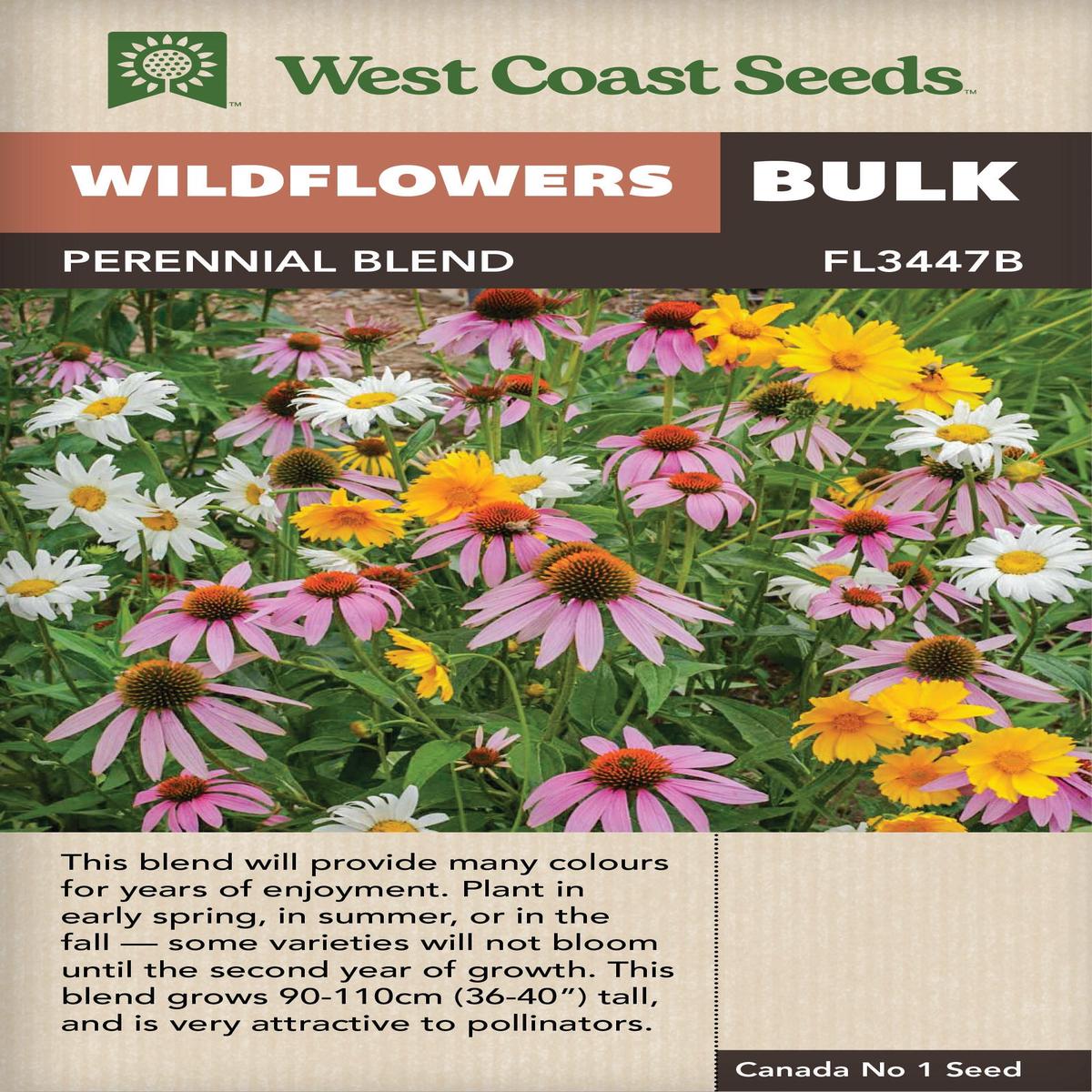
All perennials in this mix! Thesespecies will provide many colours for years of enjoyment. When fall planted, the flowers will blossom the following spring. When spring planted, if the conditions are right, there will be some flowering, but most will not flower until the following spring. The advantage of spring or summer planting is that the plants have a well-established root system for the following spring. Perennial Mix wildflower seeds will grow to an approximate height of 90-110cm (36-40″) under normal conditions. This mix blends nicely with our other wildflowers to provide a good perennial base.
Recommended rate of application: 141g per 1,000 square feet.
The Perennial Wildflower Seeds ingredients are listed below. This is the right blend to establish where flowers are needed to come back year after year. Perennial flowers are often drought resistant and very winter hardy, so they can be relied upon for blooms season after season. This blend includes perennials that open at various times of the season, too. So there is always something in bloom.
| Black-Eyed Susan |
Rudbeckia hirta |
| Blanket Flower |
Gaillardia aristata |
| Butterfly Milkweed |
Asclepias tuberosa |
| Dwarf Evening Primrose |
Oenothera missouriensis |
| Eastern Columbine |
Aquilegia canadensis |
| Gayfeather |
Liatris spicatus |
| Lance Leaf Coreopsis |
Coreopsis lanceolata |
| Lewis Flax |
Linum lewisii |
| New England Aster |
Aster novae-angliae |
| Ohio Spiderwort |
Tradescantia ohiensis |
| Ox-Eye Sunflower |
Heliopsis Helianthoides |
| Prairie Coneflower |
Ratibida columnifera |
| Purple Coneflower |
Echinacea purpurea |
| Rocky Mountain Penstemon |
Penstemon strictus |
| White Upland Aster |
Aster ptarmicoides |
| Wild Bergamot |
Monarda fistulosa |
Direct sow early March to the end of May. Wildflower seeds can also be sown in the autumn, but you may lose a certain percentage of seeds to water, birds, and animals. To make the most of the annual species, direct sow in March.
If there are no plants (including weeds) growing in the site you want to plant, there may be a problem with the soil. Possible issues may be soil fertility, lack of drainage, or the need for soil amendments to improve texture. In such spots (eg, beneath a cedar tree), few plants will thrive, including wildflowers.
Remove as much existing vegetation as possible through pulling or tilling under in order to minimize competition. Loosen the soil by scraping, raking, or tilling. Wildflower blends will not usually take if planted into existing lawn because the thatch prevents their contact with soil.
In small areas, seeds can be scattered by hand. In larger areas, you may want to employ a lawn spreader or some other mechanical means. We recommend adding 1-2 parts clean, dry sand to 1 part wildflower seeds which will help the seeds spread evenly. Do not use beach sand, as it usually contains salt. It may be wise to spread most of the seed, but to save some for filling in bald spots at a later date. Seeds must come into contact with the soil in order to germinate. Do not bury seeds more than 2-3 times their thickness.
Aim for a planting density of 70 seeds per square foot. 90g of seeds will cover 1,000 ft. Use 4kg per acre. 500g covers about 5,500 ft. If you are seeding an area where site preparation and weeding are not possible, double this rate.
Keep the seeded area as evenly moist as possible to help the seeds germinate and the young seedlings become established. Weeds need to be kept under control. Once they are growing, most mixes will not require additional water except in long periods of hot, dry weather. All of our mixes should re-grow for several years, but will benefit from re-seeding. In late summer, many of the components will produce seed heads that can be harvested and replanted the following spring.

 -20%