Highly perforated, paper-thin foliage with lacy silhouette
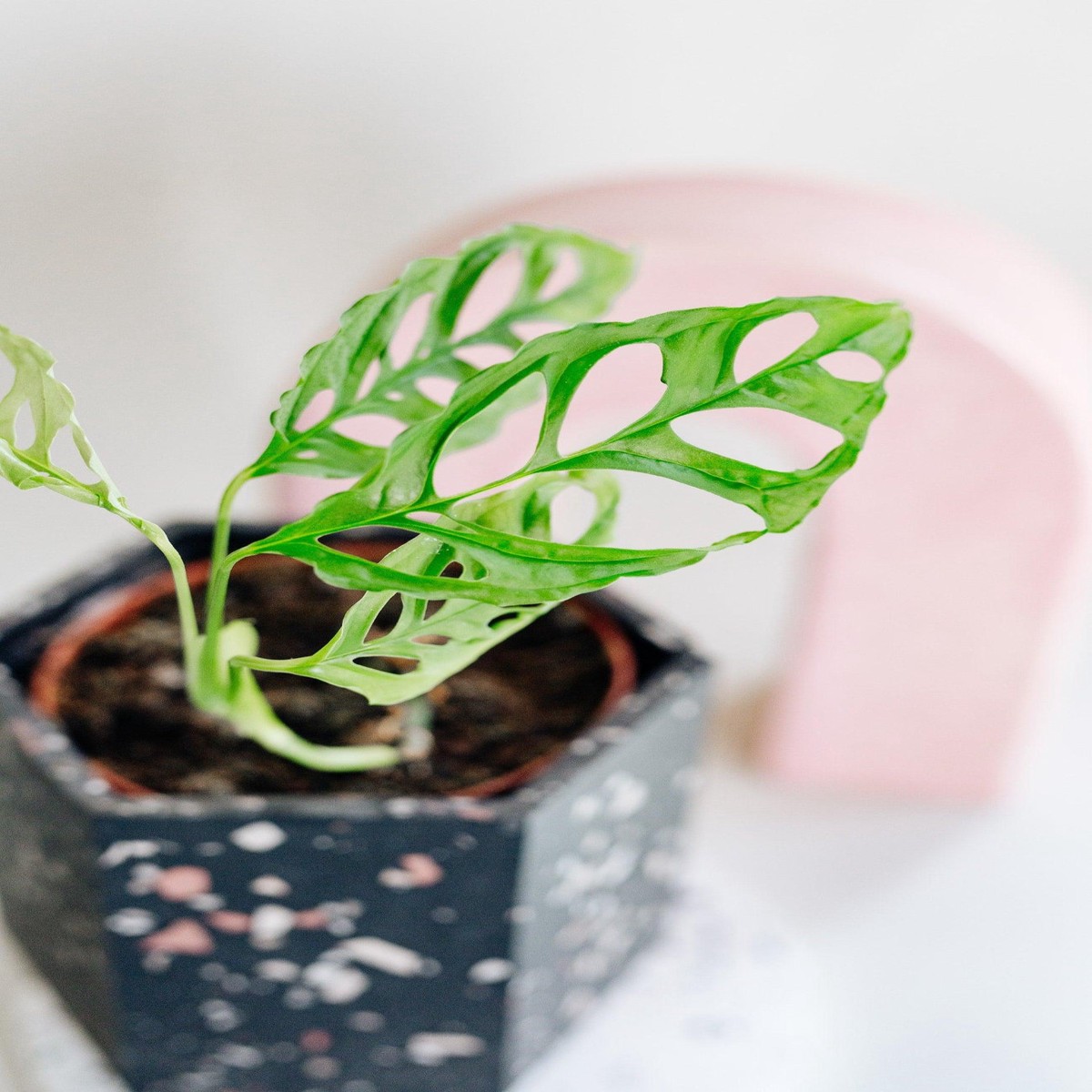
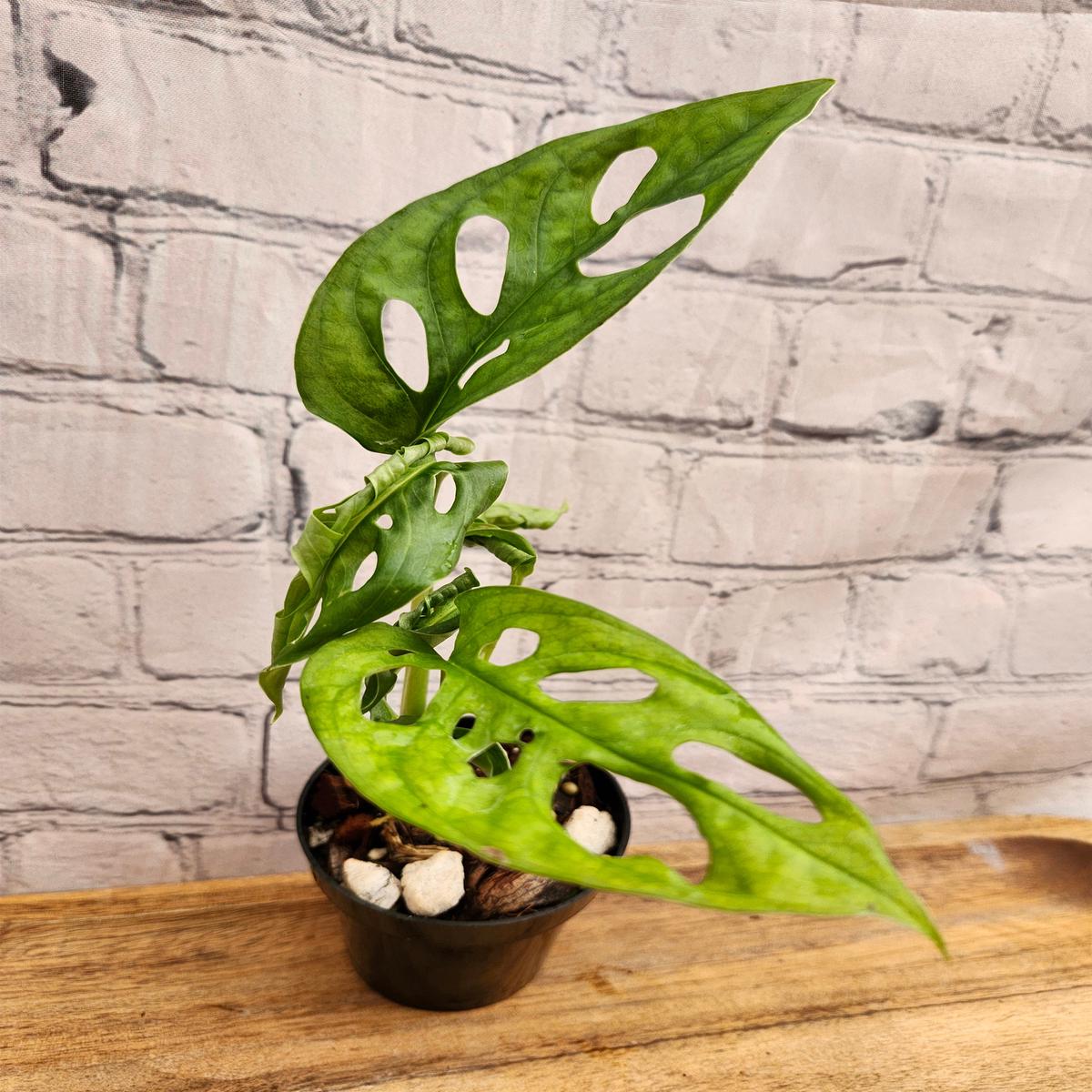
This plant presents dramatically thin, almost translucent leaf tissue and a high density of perforations that can make each blade look more lace than leaf. Monstera Obliqua Peru is described in trade as having very small, delicate leaf blades with a fragile, ethereal silhouette and a visibly papery texturean effect that reads as airy and light on a shelf or inside a glass cabinet.
In indoor development it behaves as a vining, aerial-rooting aroid that naturally climbs or attaches to moist vertical surfaces. True obliqua forms are reported to remain small-leaved and persistently heavily fenestrated even as they mature; by contrast, karstenianum-type Peru trade forms tend to develop thicker, textured leaves, and Monstera adansonii usually has a sturdier lamina with fewer, larger holes. Those differenceslamina thickness and fenestration densityare the most useful visual anchors when comparing plants.
Real-world ownership means specialist expectations: this form is sensitive to low humidity, prone to browning at dry edges, and can support spider mites or thrips if conditions are dry. It is slow-growing and benefits from a moist vertical support (moss pole or cork) for its aerial roots. One honest limitation: the retail name Obliqua Peru is used inconsistently in commerce, so the supplied plant may follow one of several growth habits and care needs.
Best for humid cabinets, terraria or a dedicated bright-shelf spot. Available as a Baby (small shelf, desk, grow-on option) or a Medium (shelf, side table, desk) the Baby suits a grow-on or cabinet project, while the Medium offers a more immediate, leafy display.
Only logged in customers who have purchased this product may leave a review.

 -20%