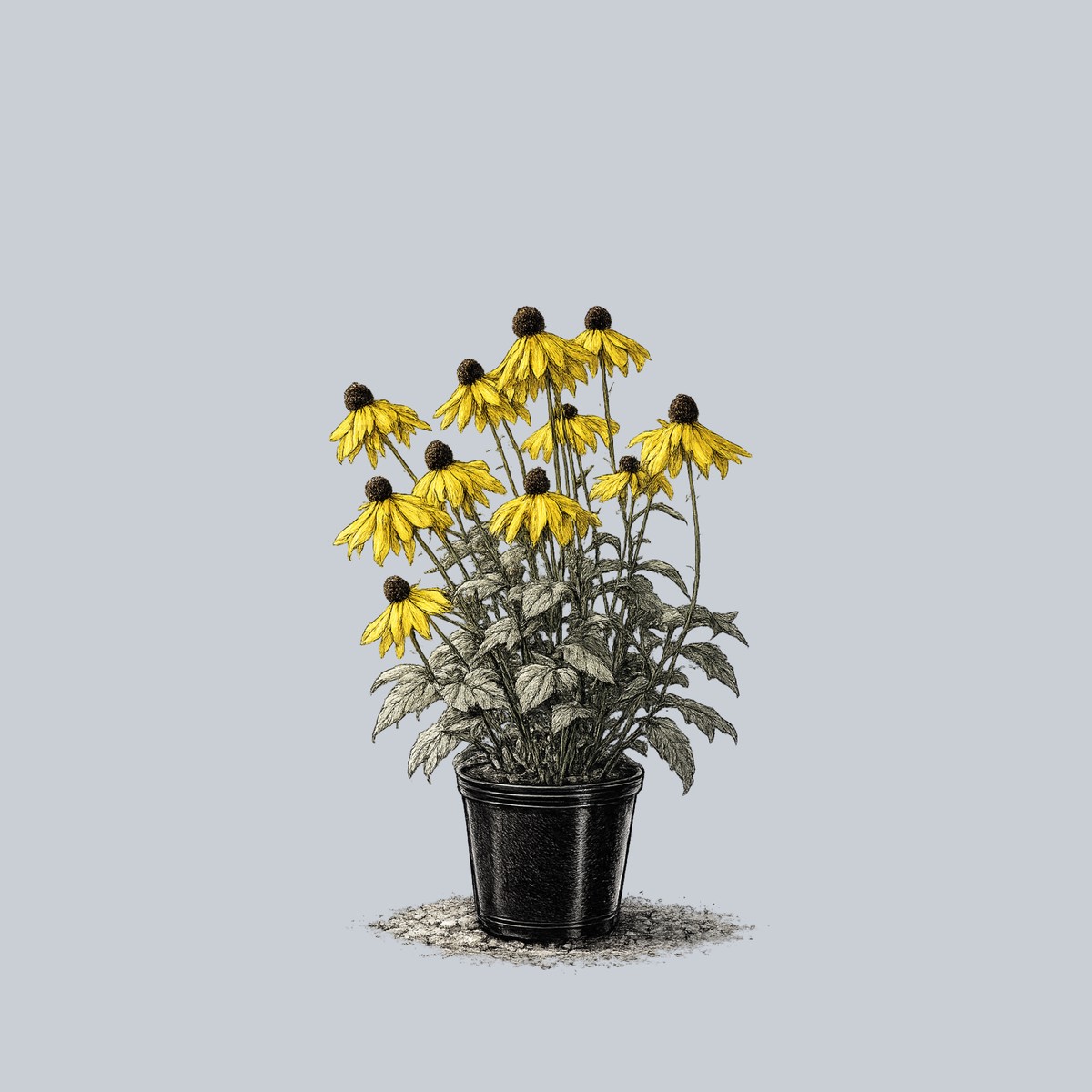
Rough Coneflower brings tall, prairie-style energy to summer gardens with bright yellow blooms that rise above surrounding plants. It is an easy way to add height, movement, and pollinator activity without a lot of maintenance. The flowers have a distinctive, sculptural cone, so the planting stays interesting even as blooms mature. Give it sun and space, and it can settle in as a dependable, long-lived perennial that looks at home in naturalistic designs.
Distinctive Features
Rudbeckia grandiflora produces large, golden-yellow daisies with noticeably drooping rays surrounding a prominent brown to purplish-brown central cone. Bloom typically runs from late spring through summer, with timing shifting by region and site conditions. The plant forms an upright clump with coarse, rough-textured foliage and can gradually expand by rhizomes to create larger colonies. Mature size is commonly about 3 to 5 feet tall and 2 to 3 feet wide.
Growing Conditions
Sun: Full sun is best for strong stems and the heaviest flowering, with light shade tolerated.
Soil: Average to fertile, well-drained soil is ideal, and it adapts to a wide range of soil types when drainage is reasonable.
Water: Provide regular water during establishment, then maintain medium moisture, with some drought tolerance once established.
USDA Zones: Hardy in zones 4 to 8.
Mature Size: About 3 to 5 feet tall and 2 to 3 feet wide.
Ideal Uses
Focal Point: Use a small group as a summer focal point at the back of a border where the tall cones can anchor the planting.
Prairie Plantings: Add to meadow-style designs for height, texture, and a natural rhythm with grasses and native perennials.
Naturalized Areas: Plant where it can slowly spread and form colonies for an established, long-term look.
Pollinator Gardens: Include in wildlife-friendly beds to support bees and butterflies through the bloom season.
Cut Flower Beds: Grow for sturdy stems and bold blooms that add shape and color to simple arrangements.
Low Maintenance Care
Deadheading: Remove spent blooms for a tidier look, or leave cones to mature for seasonal texture.
Watering: Deep water during extended dry spells, especially in the first season.
Containment: Divide clumps or edge out rhizomes every few years if you want to limit spread.
Staking: Provide light support in windy sites or rich soils where tall stems may lean.
Cutback: Cut stems back in late fall or early spring to refresh the planting and make room for new growth.
Why Choose Rough Coneflower?
Architectural Cones: Prominent centers add bold texture and a strong silhouette in summer borders.
Vertical Structure: Tall stems create instant height and help mixed plantings look layered and intentional.
Naturalizing Strength: Rhizomatous growth can build impressive clumps and colonies in the right setting.
Pollinator Value: Flowers provide reliable forage that keeps garden activity high in peak season.
Easy Garden Fit: Performs well in sunny, well-drained sites with straightforward care.
If you want a tall, native-style perennial that brings both color and structure, Rough Coneflower is a strong choice. Plant it where it has room to mature, and it will reward you with a bold summer show and lasting texture. It pairs especially well with ornamental grasses, coneflowers, blazing star, and other sun-loving perennials for a confident, natural finish.
Only logged in customers who have purchased this product may leave a review.

 -20%