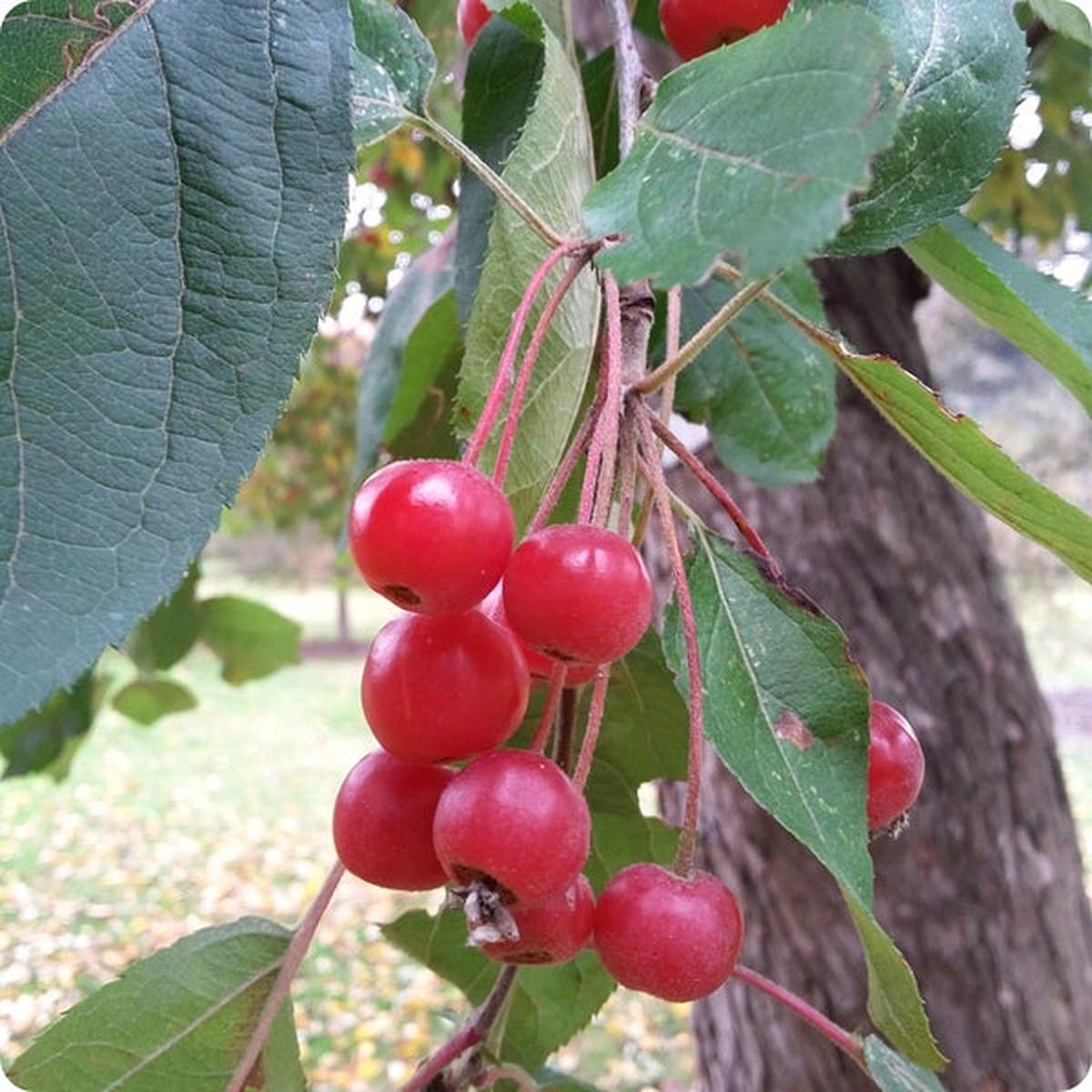
Himalayan Crabapple (Malus baccata) is a beautiful, hardy ornamental tree valued for its profuse spring blossoms, small colorful fruits, and adaptability to cold climates. Native to Asia, this species produces fragrant white to pale pink flowers that attract bees and pollinators, followed by clusters of bright red to yellow crabapples in late summer.
The Himalayan Crabapple is ideal for use in home landscapes, wildlife gardens, and naturalized plantings. It offers year-round interest blossoms in spring, fruits in summer, and golden-red foliage in fall. This Non-GMO species is also a valuable pollinator for other apple trees, making it a dual-purpose choice for beauty and productivity.
Features
Abundant white spring flowers with light fragrance
Produces small, colorful crabapple fruits attractive to birds
Cold-hardy and disease-tolerant ornamental species
Excellent pollinator companion for orchard apples
Non-GMO, easy to grow, and low maintenance
Brilliant seasonal foliage color for year-round appeal
Specifications
Scientific Name:Malus baccata
Common Name: Himalayan Crabapple
Plant Type: Deciduous tree
Growth Height: 2040 feet
Spread: 2035 feet
USDA Hardiness Zones: 28
Sunlight: Full sun
Soil Type: Well-drained loamy or sandy soil, pH 6.07.5
Bloom Season: Spring (AprilMay)
Fruit Season: Late summer to early fall
Fruit Color: Red to yellow
Flower Color: White to pale pink
Foliage: Green leaves turning yellow-orange in fall
GMO Status: Non-GMO
Planting Season: Spring or fall
Sowing Depth: inch
Germination Time: 3090 days (cold stratification required for 90120 days)
Watering Needs: Moderate; consistent moisture during establishment
Maintenance: Prune in late winter to shape and remove dead wood
Wildlife Benefits: Attracts bees, butterflies, and songbirds

 -20%