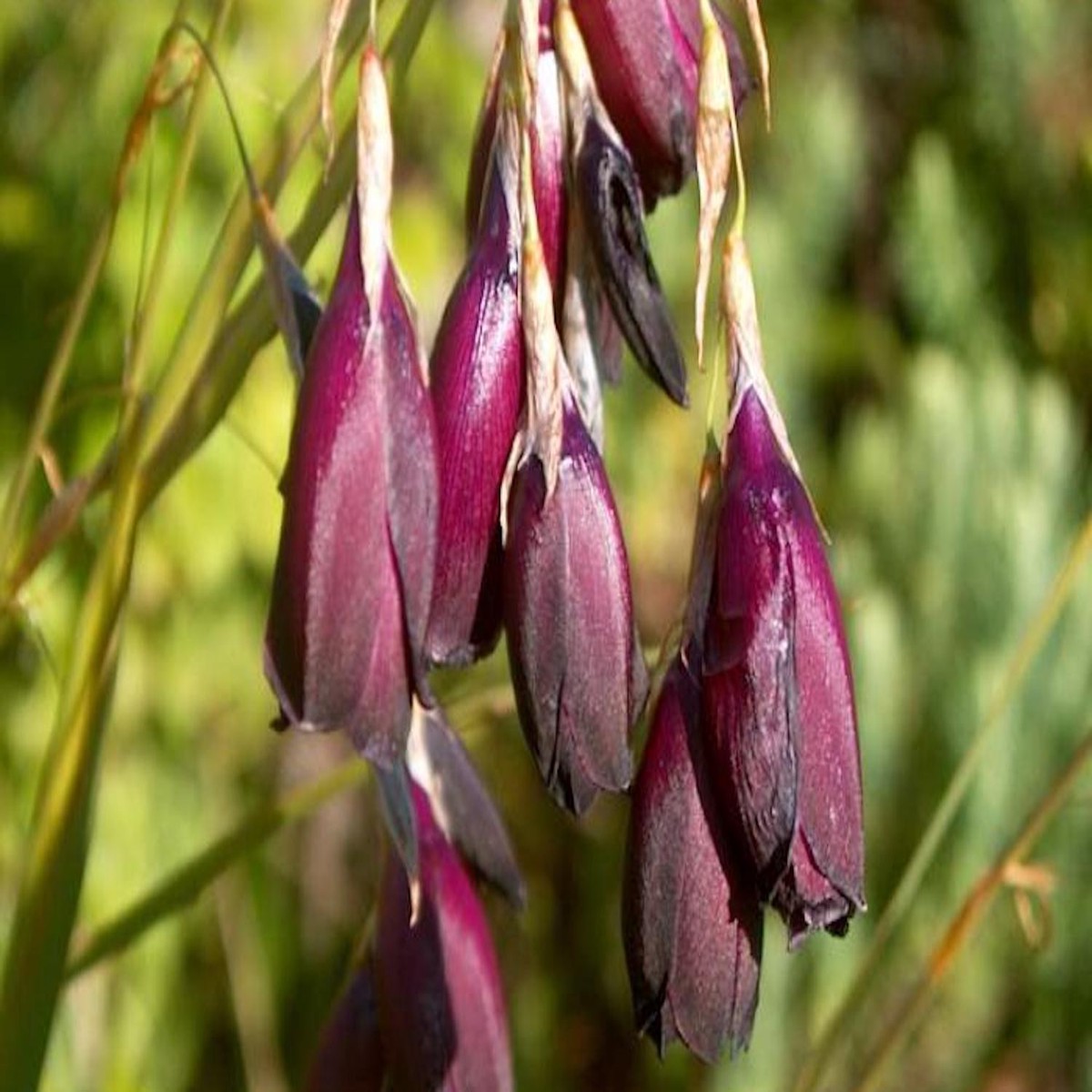
Dierama pulcherrimum dark cerise-flowered does exactly what it says on the tin: a dark cersie flowered Dierama pulcherrimum.
Thepulcherrimum species is a plant introduced to British gardeners in 1866 by the Yorkshire botanist James Backhouse; it is today the most commonly seen dierama in cool-temperate gardens.
Position:Full sun, partial shade
Soil:Almost any soil, grows well in Ballyrobert
Flowers:June, July, August
Other features:Grows well in Ballyrobert,Cut Flowers or Dried Flowers
Hardiness:H4 – Hardy through most of the UK (-10 to -5C),Fully hardy – grows well in Ballyrobert!
Habit: Bushy, clump forming
Foliage:Evergreen
Height:75 – 105 cm (2.5 – 3.5 ft)
Spread:60 – 90 cm (2 – 3 ft)
Time to full growth:2 to 5 years
Plant type: Herbaceous Perennial, grass like
Colour: Green,purple, black
Goes well with:Grasses, Iris, Nepeta, Lavendula
About this genus:
Dierama is a genus of flowering plants in the iris family (Iridaceae). Because they are so beautiful you would think the name comes from “to die for” but it is a bit more boring than that; it isderived from the Greek word Dierama, meaning “funnel”, and alludes to the shape of the flower. Long known to gardeners, the species Dierama pendulum wasfirst collected in 1772 by the Swedish naturalist Carl Peter Thunberg, although the genusDierama was first established by the famous German botanist Karl Koch (1809-1879).Common names of various species include harebells, fairybells, wandflowers, and, of course, angels fishing rod.
Dierama are evergreen perennials growing from large, fibrous-coated corms. The inflorescence is a panicle of several spikes of flowers. The spikes may hang like bells or grow erect – however most gardeners are familiar with the hanging species likeDierama pendulum or Dierama pulcherrimum; most commonly known asangels fishing rod.
Most of the Dierama species we have arependulum, pulcherrimumor some hybrid of them. We grow them almost everywhere in our garden at Ballyrobert and as the fishing-rod name would suggest, they do well in wet areas. However they don’t like being moved around or being in pots. Full sun or part shade in fine, many are slow growing so be patient!
Good plant partners include their close cousin Irisand some grasses (in fact when it is not flowering many people confuse Dierama with a grass!). We also experiment with Nepeta and Lavendula.
Only logged in customers who have purchased this product may leave a review.

 -50%