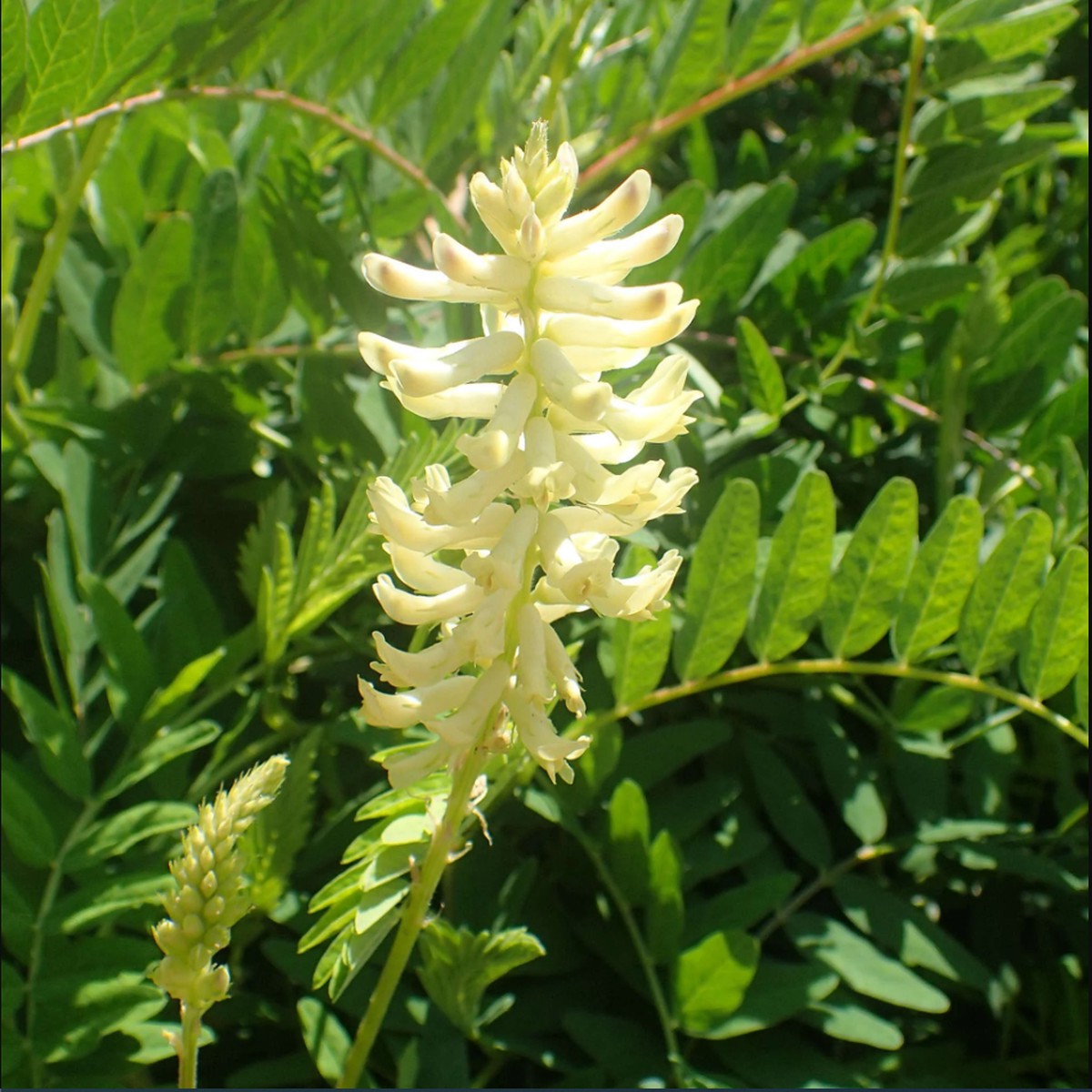
Milkvetch ( Astragalus canadensis ) is a perennial plant native to Quebec, belonging to the Fabaceae family. It generally reaches a height of 60 to 120 cm and produces, from June to August, clusters of cream to yellowish pea-shaped flowers.
2. Sowing
Difficulty level : Medium
Type of sowing : Indoors or directly in the ground
Sowing Technique : The seeds have physical dormancy due to their hard seed coat. To improve germination, it is recommended to scarify the seeds by rubbing them lightly with sandpaper or soaking them in warm water for 24 hours before sowing.
Sowing depth : Approximately 0.5 cm
Germination days : 14 to 30 days
Germination temperature : 20 to 25C
3. Culture
Ease of cultivation : Average
Growing season : Spring to fall
Transplanting : If sown indoors, transplant seedlings after the last frost (late May to early June in zone 5-6)
Plant spacing : 45 to 60 cm between plants
Hardiness Zone : 3 to 7
Light : Full sun to partial shade
Soil Type : Well-drained soils, preferably sandy or loamy
Soil pH : Neutral to slightly alkaline
Soil Moisture : Moderate, tolerates periods of drought once established
Soil fertility : Not very demanding, enriches the soil with nitrogen thanks to its fixing capacity
Time before flowering : 2 to 3 years after sowing
Watering : Regular during establishment, then moderate
Other characteristics : Attracts pollinators, especially bees and butterflies. It is also used in phytoremediation to improve soil quality.
4. Use
Ideal for naturalistic gardens, flower meadows and ecological restoration projects, milkvetch contributes to biodiversity and ecosystem health.
5. Companionship
Friendly plants : Asters, rudbeckias, echinaceas
Enemy plants : None known
This native plant is well adapted to Quebec’s climates and is an excellent choice for gardeners wishing to promote biodiversity and enrich their garden soil.
Only logged in customers who have purchased this product may leave a review.

 -20%